

Innovation – Start from 3D Printing
Innovation comes from life and 3D printing technology has turned imagination into reality.
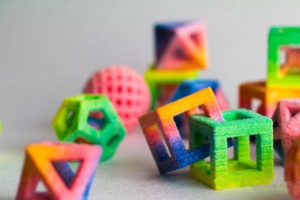
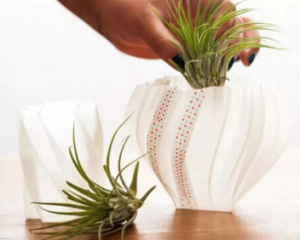
Colorful Sweets Multi-shaped Vase
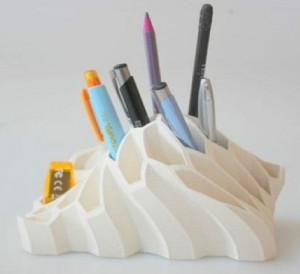
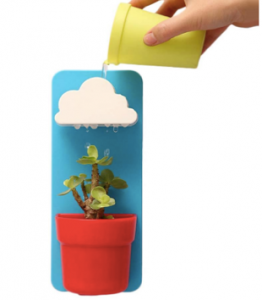
Unusual Shaped Pen Holder Cloud-shaped Sprinkler
Kids were born to be innovators
Some adults may not sure how to apply 3D printers to their lives. However, if you give a kid a 3D printer and he or she will figure out how to use it. It seems that they were born with the ability to use technologies. Kids will grow up with the technology and those young innovators will 3D print the future (John, 2015).
Inspiring Kids to Learn
Using 3D printers in the classroom allows kids to learn by using their own machines, teaching themselves and also learning from others. In the process of learning, kids are not only inspired to be makers and bring abstract concepts to life but also prepare themselves to work in the factories in the future.
Enhancing STEAM Education
According to the Institute of Electrical and Electronics Engineers Education (IEEE) Society, 3D printing technology will significantly enhance STEAM education in the following years (John, 2015).
Science (S) and Technology (T)
As the New Media Report points out using 3D printers enable, “More authentic exploration of objects that may not be readily available to schools. For example, in science and history classes, students can make and interact with models of fragile objects such as fossils and artifacts. In chemistry class, students can print out models of complex proteins, pathogens, and DNA strands (John, 2015).”
Engineering (E), Art (A) and Math (M)
Can kids be trained to become a mechanical engineer? The answer is yes. With 3D printers, students at Swanson Middle School helped a disabled student to operate his wheelchair and students at the Walt Disney Magnet School made objects to help to teach blind students (John, 2015).
3D printers make art from geological formations, works of architecture, dinosaur bones, Leonardo da Vinci’s models, and daily necessities and also math models. A study conducted by Michigan State University has shown a direct correlation between success and artistic hobbies in scientific fields. Nobel Prize winning scientists who have artistic hobbies are 2.85 times compared with the general scientific population (Aaron, 2020).
CREARTINNO – Creative Artistic Innovation
Our advanced STEAM courses specialize in teaching 3D printing, 3D modeling, 3D slicing and language programming, aiming to cultivate talents in the field of technology and innovation by guiding learners to create their own unique FPV Drones.
References:
Aaron, P. (2020). How 3D printing fuels S.T.E.M. education. Retrieved from https://www.stratasys.com/explore/blog/2016/3d-printing-steam-education
John, H. (2015). 3D Printing Will Rock the World. Ebook from Amazon.

